The world’s first website, published in 1991, was a few paragraphs of text on a uniform background with a command line instead of links.
Since then, websites have come a long way. There are now more than a billion web resources on the Internet, each consisting of a multitude of visual elements. The process of creating the look and feel of websites has become a whole science, which includes not only designing the graphical shell, but also thinking through the navigation, organizing textual content and analyzing user behavior. This science is called web design.
In this article we explain in detail what web design is: its basic principles, differences from web development, basic elements, popular options for arranging elements on the page, and much more. The guide will be suitable for those who are going to create a site on their own, as well as those who just want a better understanding of web design. Online nz dollars casinos here.
What is web design?
Web design is the planning and creation of content so that a site is beautiful, functional, and user-friendly. To achieve each of these goals, web designers use a wide range of tools.
To make a site beautiful, web designers select the right color scheme, choose the right fonts, add photos, images and animation elements to the site, and add special effects like parallax.
To make the site functional, web designers carefully think through the structure of pages, develop navigation, fill sections with informative and relevant content and add additional elements: for example, surveys, subscription forms, widgets with social networks, interactive maps, and more.
To make the site user-friendly, web designers analyze user behavior. This helps to make the interaction with the site intuitive and avoid confusion. For example, one of the basic rules of web design is to place the most important information at the top of the screen so that the user does not have to scroll down the page.
1. The difference between web design and web development
Web design and web development are often confused with each other. Therefore, it is important to understand the differences between the two disciplines.
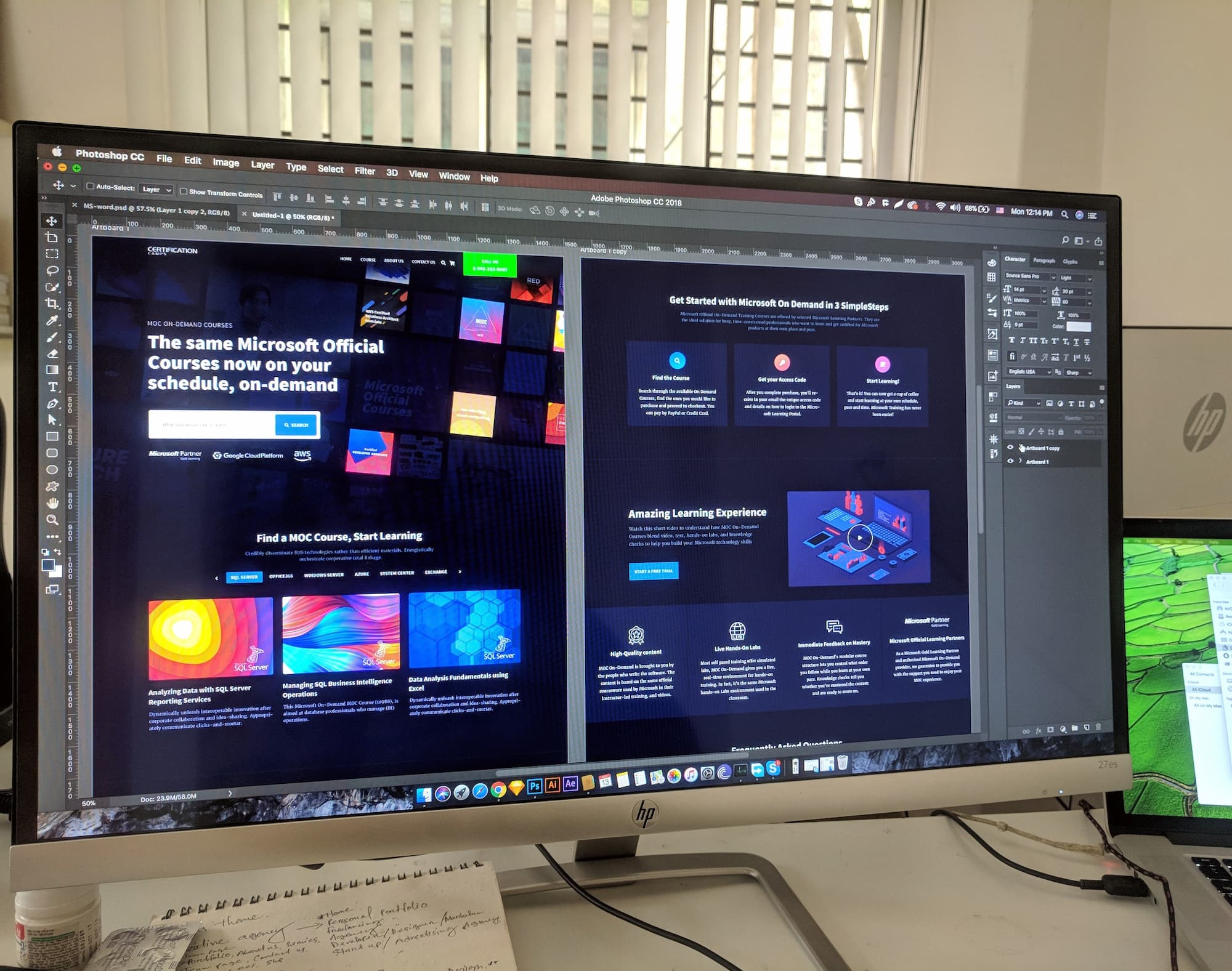
Web design is the process of creating the visual shell of a website, its structure and navigation system in the form of a layout. We will elaborate on this in the following paragraphs.
Web development is bringing a web designer’s layout to life using software code. Web developers are responsible for making sure that all elements of the site actually work: pages opened, links clicked, and images, widgets and special effects functioned correctly.
If you compare a website to a car, web designers think about the look and feel of the car, driving comfort, ergonomic seats and fail-safe safety systems. And web designers think about making sure the car really drives: starts up, accelerates to the speeds you want, and brakes exactly when you want it to.
Web developers often use the following tools:
HTML (HyperText Markup Language) is the programming language used to create the markup of websites. It is HTML that allows websites to be viewed in browsers like Google Chrome and Safari.
CSS (Cascading Style Sheets) is an auxiliary programming language that is used to define the appearance of a page. Unlike HTML, which is mainly responsible for page structure, CSS allows you to change the color of text, increase margins and add animation – in short, it makes the website more aesthetic and pleasing to the reader. $5 minimum deposit casinos in Canada here.
CMS (Content management system) is a content management system for a website. That is, a platform on which you can create a site even without knowledge of programming. Wix is one of these systems: with the help of our platform, more than 200 million people have already created their website.
2. The principles of web design
What’s the difference between good design and bad design? Good design is based on basic principles that have evolved over 30 years of web creation. Sure, an experienced designer can create a good product without these rules-but if you’re just learning how to design a website, following basic principles of web design can help you avoid common mistakes.
3 Website Maintenance
Web design is constantly changing – and your site should evolve with it. Outdated elements can discourage users, and with it, reduce traffic and sales.
Keep up with the latest web design trends, edit and add content, continue to optimize SEO, and check from time to time how fast the pages are loading.